
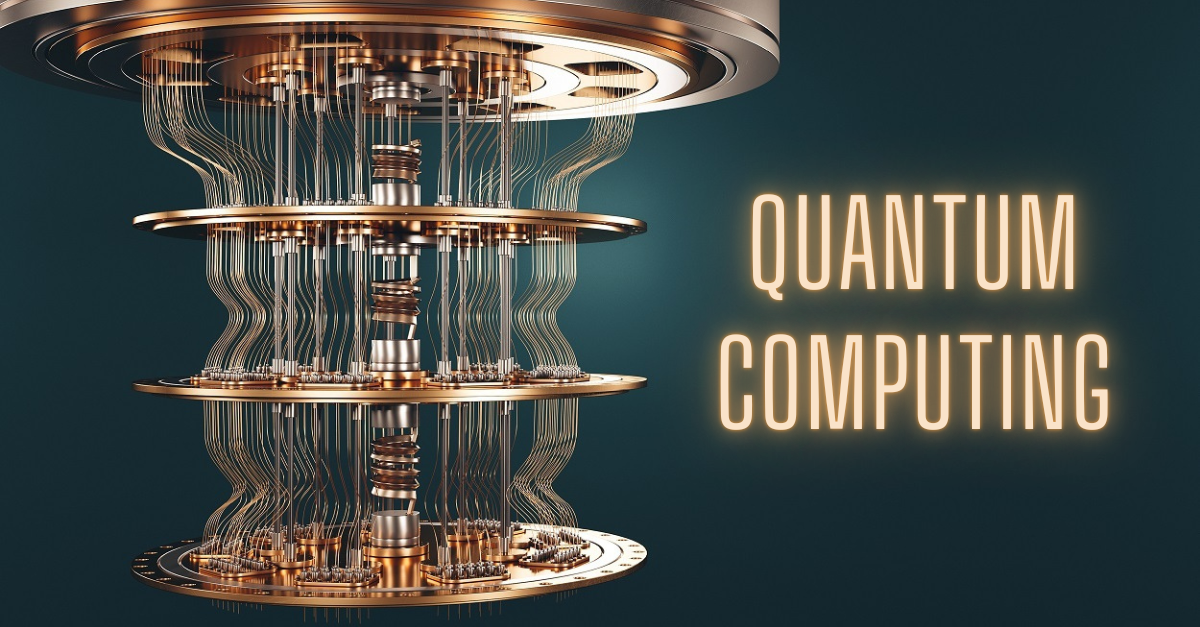
For decades, the world has witnessed wave after wave of technological change, each reshaping industries, economies, and the way people live. Artificial intelligence has already become one of the most influential forces of the modern era, transforming how information is processed, decisions are made, and systems operate. Yet even as AI continues to evolve, another transformative technology is rising alongside it. Quantum computing, once confined to the realm of theoretical physics, is now emerging as a practical tool capable of unlocking computational abilities beyond anything seen before. Together, these two forces are paving the way for a new technological revolution that has the potential to redefine the future.
The idea of machines thinking, learning, and making autonomous decisions once felt like science fiction. Today, AI algorithms power everything from digital assistants to medical diagnostics and financial markets. In parallel, quantum computing promises to break through the limits of classical computers, offering unprecedented power to solve problems previously considered impossible. When combined, these technologies amplify each other, creating possibilities far greater than their individual contributions. Understanding this convergence is essential for anyone interested in the next era of innovation.
Artificial intelligence has always relied on computational power to reach new levels of performance. As models grow more complex and datasets grow larger, traditional hardware struggles to keep up. Quantum computers, with their ability to process vast amounts of information simultaneously, offer a potential solution. Instead of relying on binary bits, which represent either zero or one, quantum computers use qubits, which can represent multiple states at once. This property allows them to handle exponential amounts of information far more efficiently. In fields where AI requires extensive training time or massive resources, quantum computing could provide the breakthrough needed to accelerate progress.
One of the most promising areas where AI and quantum computing intersect is optimization. Many modern challenges, such as planning transportation routes, managing global supply chains, or optimizing financial portfolios, involve countless variables and potential outcomes. Classical computers struggle with these complex calculations, often resorting to approximations rather than precise solutions. Quantum-powered AI systems could evaluate many possibilities at once, finding efficient solutions at unprecedented speeds. This would have profound implications for transportation, logistics, energy management, and economic forecasting.
The fusion of AI and quantum computing also has the potential to revolutionize scientific research. Chemistry, material science, and biology all rely heavily on understanding complex molecular interactions. Classical computers cannot fully simulate these interactions due to their immense complexity. Quantum computers are inherently suited for modeling quantum systems, meaning they can simulate chemical reactions, biological processes, and material structures at the most fundamental level. When combined with AI’s ability to analyze patterns within these simulations, breakthroughs in drug discovery, renewable energy materials, and advanced manufacturing could arrive much faster.
Healthcare is one field poised to benefit significantly from this technological convergence. AI has already shown remarkable progress in diagnosing diseases, analyzing medical images, and predicting treatment outcomes. Quantum computing could enhance these capabilities by processing vast medical datasets and identifying subtle relationships within them. The ability to analyze genetic information more thoroughly and model biological systems more accurately could lead to highly personalized medical treatments. Diseases that currently lack effective treatment options might become manageable as AI and quantum computing work together to identify new therapeutic pathways.
The financial sector is another domain where AI and quantum computing could reshape long-standing practices. Trading algorithms, risk assessments, and fraud detection systems already depend heavily on AI. Quantum computing could elevate these systems by rapidly evaluating complex market variables and identifying patterns invisible to classical computers. This would not only improve decision-making but also increase the accuracy of predictive models. With more powerful computational capabilities, markets could become more stable, secure, and transparent. At the same time, financial institutions will need to adapt to the new risks and ethical considerations introduced by these technologies.
Cybersecurity remains one of the most important concerns in the digital world, and the arrival of quantum computing introduces both opportunities and challenges. Many of today’s encryption systems rely on mathematical problems that classical computers cannot easily solve. Quantum computers, however, could break these systems in a relatively short amount of time. This raises concerns about data privacy and the security of sensitive information. At the same time, quantum computing enables new forms of encryption that are theoretically unbreakable. AI systems could be used to monitor and detect threats more effectively, while quantum technology could protect information with unprecedented security. This dual nature makes cybersecurity one of the most dynamic fields in the coming technological revolution.
The emergence of AI and quantum computing also raises important ethical considerations. As these technologies gain power, the potential consequences of their misuse grow. Issues around privacy, decision-making transparency, algorithmic biases, and accountability will become even more complex. Quantum computing’s ability to process enormous datasets could amplify these concerns if not carefully controlled. It is essential for governments, researchers, and technology companies to establish ethical frameworks that ensure these innovations are used responsibly. Without proper guidelines, the benefits of this revolution could be overshadowed by harmful consequences.
The economic implications of the AI-quantum revolution cannot be overstated. Countries and companies are investing heavily in quantum research, recognizing its potential to become one of the most valuable resources of the future. Nations that lead in quantum and AI development may gain significant advantages in global competitiveness, scientific leadership, and national security. At the same time, societies must prepare for changes in the job market. Just as AI has altered traditional roles in industries such as manufacturing, customer service, and transportation, quantum computing could transform roles in research, engineering, and software development. Workers will need support in adapting to these shifts, and education systems will need to evolve to prepare future generations for careers shaped by these technologies.
As industries adopt quantum-enhanced AI systems, collaboration will become more important than ever. Scientists, engineers, businesses, and policymakers will need to work together to maximize the benefits and manage the risks. Quantum computing is still in its early stages, and many challenges remain. Qubit stability, error correction, and scalability are all active areas of research. While significant progress has been made, practical large-scale quantum computers are still under development. AI will continue to play an important role in solving these challenges by assisting with error-correction algorithms, optimizing quantum circuits, and helping researchers design more efficient quantum systems.
One of the most transformative aspects of the AI-quantum revolution is the potential for entirely new industries to emerge. Just as the rise of the internet created digital markets, e-commerce platforms, and global communication systems, the fusion of AI and quantum computing may lead to innovations that are impossible to predict today. Breakthroughs in energy, transportation, biology, and communication could reshape the foundations of modern society. Technologies such as quantum-enhanced sensors, advanced cryptography, and molecular-level manufacturing may become central components of daily life.
The environmental impact of AI and quantum computing is another important dimension to consider. Training large AI models requires enormous computational resources, which can increase energy consumption. Quantum computing, by contrast, has the potential to perform complex calculations with significantly greater efficiency. This could reduce the environmental footprint of high-performance computing. Furthermore, quantum-enhanced AI could accelerate research in sustainable energy technologies, environmental modeling, and climate prediction. These advancements could help address global challenges such as resource scarcity, pollution, and climate change.
Education will play a crucial role in preparing society for this new era. Understanding AI and quantum computing will become essential for students across many fields, not just computer science. The interplay between these technologies will influence business, healthcare, engineering, communication, and public policy. Developing curriculums that teach students how to work with these emerging tools will be vital for long-term progress. Encouraging interdisciplinary learning will help create a generation of innovators capable of navigating the complexities of the quantum-AI landscape.
As the world moves toward this next technological revolution, one of the most important factors will be accessibility. The benefits of AI and quantum computing must not be confined to a few wealthy nations or institutions. Creating open platforms, shared research environments, and collaborative partnerships will be key to ensuring global participation. Widespread access to these technologies will stimulate innovation and allow people from diverse backgrounds to contribute to future breakthroughs. When technology is shared, societies benefit more equitably, and global progress accelerates.
The convergence of AI and quantum computing represents more than an incremental step forward. It signifies a transformational shift poised to redefine what technology can achieve. As these fields evolve and merge, they will push the boundaries of knowledge and ignite new forms of innovation. The possibilities are vast, spanning from scientific discovery and global commerce to healthcare, security, and beyond. This revolution will not only change industries but also reshape the way people think about intelligence, computation, and the potential of human creativity.
While challenges lie ahead, the path forward holds immense promise. The next decade will likely bring breakthroughs that reshape our understanding of what machines can do. As AI continues to grow more intelligent and quantum computing becomes more practical, their combined impact will reverberate across every aspect of society. The future will belong to those who embrace these technologies, understand their power, and harness them responsibly.
In this evolving landscape, one truth becomes clear. The next technological revolution is not a distant dream but an unfolding reality. AI and quantum computing are setting the stage for a new era defined by remarkable progress and limitless possibility. Those who prepare for this transformation today will help shape a future where technology serves humanity in deeper, more meaningful ways.