
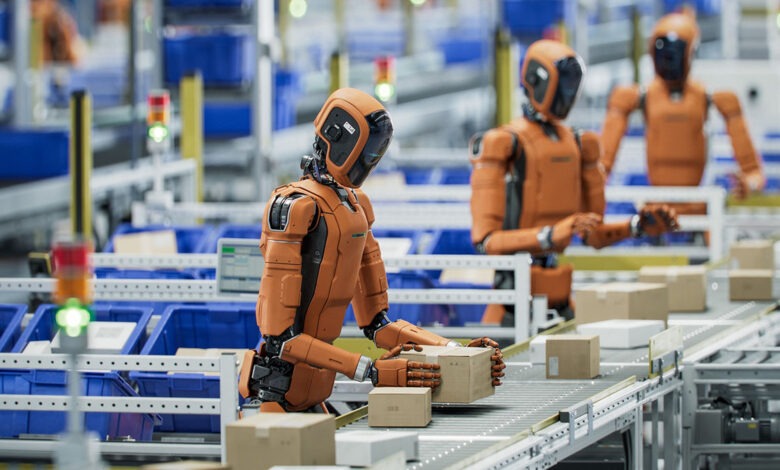
Industrial robotics has moved from being a symbol of futuristic ambition to a practical foundation of modern manufacturing. Factories across the world are undergoing a profound transformation as robotic systems become more intelligent, adaptive, and interconnected. What once required rigid programming and isolated automation now reflects a dynamic collaboration between humans, machines, and digital intelligence. This evolution is redefining productivity, quality, and competitiveness in ways that extend far beyond traditional assembly lines.
At the heart of next-generation manufacturing lies a simple but powerful idea. Production systems must be flexible, resilient, and capable of responding to rapid changes in demand, design, and supply conditions. Industrial robots are uniquely positioned to support this vision. They offer precision, consistency, and endurance, while recent advances in artificial intelligence, sensing technologies, and connectivity have given them a level of awareness and autonomy that was previously unattainable.
The Evolution of Industrial Robotics
The earliest industrial robots were designed to perform repetitive tasks in controlled environments. Their value came from speed and accuracy, particularly in operations such as welding, painting, and material handling. These machines followed predefined paths and could not adapt to unexpected variations. While effective, they required extensive setup and were best suited for high-volume, low-variation production.
As manufacturing needs evolved, so did robotic capabilities. The integration of advanced sensors allowed robots to perceive their surroundings with greater clarity. Vision systems enabled them to identify objects, assess alignment, and detect defects. Force and torque sensors improved their ability to handle delicate components. With these enhancements, robots began to move beyond simple repetition and toward more responsive behavior.
The most significant shift came with the application of intelligent software. Machine learning algorithms allowed robots to improve performance over time by analyzing data from their own operations. Instead of relying solely on fixed instructions, robots could adjust movements, optimize workflows, and respond to subtle changes in materials or processes. This marked the transition from traditional automation to intelligent automation.
Robotics as a Core Element of Smart Factories
Next-generation manufacturing is often described through the concept of the smart factory. In this environment, machines, systems, and people are connected through digital networks that enable real-time communication and decision-making. Industrial robots play a central role in this ecosystem.
Robots in smart factories are no longer isolated units. They are integrated with production planning systems, quality control platforms, and supply chain management tools. Data flows continuously between these elements, allowing manufacturers to monitor performance, predict maintenance needs, and adjust production schedules with minimal delay.
This connectivity enhances transparency across the manufacturing process. Managers can gain insights into operational efficiency, identify bottlenecks, and respond quickly to disruptions. Robots contribute to this intelligence by generating detailed data about cycle times, error rates, and energy consumption. When combined with analytics, this information supports more informed strategic decisions.
Collaborative Robotics and Human Partnership
One of the most transformative developments in industrial robotics is the rise of collaborative robots. Unlike traditional industrial robots that operate behind safety barriers, collaborative systems are designed to work alongside human operators. They are equipped with sensors and control mechanisms that allow them to detect human presence and adjust their behavior accordingly.
This collaboration changes the nature of work on the factory floor. Humans and robots each contribute their strengths. Robots handle tasks that require precision, strength, or endurance, while humans focus on activities that demand judgment, creativity, and problem-solving. The result is a more balanced and efficient production environment.
Collaborative robotics also lowers the barrier to automation for many manufacturers. These systems are often easier to program and deploy, making them accessible to small and medium-sized enterprises. By enabling gradual adoption, collaborative robots support a more inclusive transition toward advanced manufacturing.
Flexibility and Customization in Production
Modern markets demand products that are increasingly customized and delivered quickly. Traditional mass production models struggle to meet these expectations without sacrificing efficiency. Industrial robotics offers a solution by enabling flexible automation.
Advanced robotic systems can be reconfigured rapidly to accommodate new product designs or production volumes. Software-driven control allows manufacturers to change tasks without extensive mechanical modifications. Vision-guided robots can recognize different components and adjust their actions accordingly, supporting mixed-model production within the same line.
This flexibility is essential for next-generation manufacturing, where responsiveness is a competitive advantage. By reducing changeover times and enabling smaller batch sizes, robotics helps manufacturers align production more closely with customer demand.
Quality, Precision, and Consistency
Quality assurance is a critical concern in manufacturing, particularly in industries where safety and reliability are paramount. Industrial robots contribute to higher quality standards by delivering consistent performance across long production runs.
Robotic systems execute tasks with a level of precision that is difficult to achieve manually. This consistency reduces variability and minimizes defects. Integrated inspection capabilities allow robots to perform quality checks during the production process, identifying issues before they escalate into larger problems.
In next-generation manufacturing, quality is not an isolated function but an integral part of the production workflow. Robotics supports this integration by combining manufacturing and inspection into a seamless process, enhancing both efficiency and reliability.
Enhancing Workplace Safety
Manufacturing environments often involve hazardous conditions, heavy machinery, and repetitive motions that can lead to injury. Industrial robotics plays a vital role in improving workplace safety by taking on tasks that pose risks to human workers.
By automating dangerous operations, manufacturers can reduce exposure to harmful substances, extreme temperatures, and physically demanding activities. Collaborative robots further enhance safety by incorporating features that prevent accidents during human interaction.
Beyond physical safety, robotics also contributes to ergonomic improvements. By handling repetitive or strenuous tasks, robots help reduce fatigue and strain among workers, supporting long-term health and productivity.
Integration with Artificial Intelligence and Data Analytics
The true potential of industrial robotics in next-generation manufacturing emerges when robotics is combined with artificial intelligence and data analytics. Intelligent robots can analyze vast amounts of operational data to identify patterns and optimize performance.
Predictive maintenance is a notable example. By monitoring their own condition and usage, robots can anticipate component wear and schedule maintenance before failures occur. This proactive approach reduces downtime and extends equipment life.
Artificial intelligence also enables adaptive control, allowing robots to adjust parameters in real time based on feedback from sensors and production data. This capability enhances efficiency and ensures consistent output even in variable conditions.
Sustainability and Resource Efficiency
Sustainability has become a central priority for manufacturers facing environmental and regulatory pressures. Industrial robotics supports sustainable manufacturing by improving resource efficiency and reducing waste.
Precise robotic control minimizes material usage and energy consumption. Automated processes reduce errors that lead to scrap and rework. Robots can also support recycling and remanufacturing initiatives by efficiently disassembling products and sorting materials.
In next-generation manufacturing, sustainability is closely linked to digital optimization. Robotics contributes valuable data that helps manufacturers measure environmental impact and implement continuous improvements.
Workforce Transformation and Skills Development
The increasing adoption of industrial robotics is reshaping the manufacturing workforce. While concerns about job displacement persist, the reality is more nuanced. Robotics changes the nature of work rather than eliminating it entirely.
As robots take on routine tasks, demand grows for roles that involve system oversight, programming, maintenance, and process optimization. Workers are required to develop new skills that combine technical knowledge with problem-solving abilities.
Manufacturers that invest in training and education can ensure a smooth transition. By empowering employees to work effectively with robotic systems, organizations can create a more skilled and adaptable workforce that is prepared for the demands of next-generation manufacturing.
Challenges in Adoption and Implementation
Despite their benefits, industrial robotics presents challenges that manufacturers must address. Initial investment costs can be significant, particularly for advanced systems that integrate artificial intelligence and connectivity. Careful planning and a clear understanding of return on investment are essential.
Integration with existing equipment and processes can also be complex. Legacy systems may require upgrades or replacement to support modern robotics. Cybersecurity becomes a critical concern as connected robots increase exposure to digital threats.
Successful adoption depends on a strategic approach that aligns technology choices with business objectives. Manufacturers must consider not only technical feasibility but also organizational readiness and workforce engagement.
The Future Outlook for Industrial Robotics
The trajectory of industrial robotics points toward greater autonomy, intelligence, and collaboration. Future systems are expected to exhibit enhance