
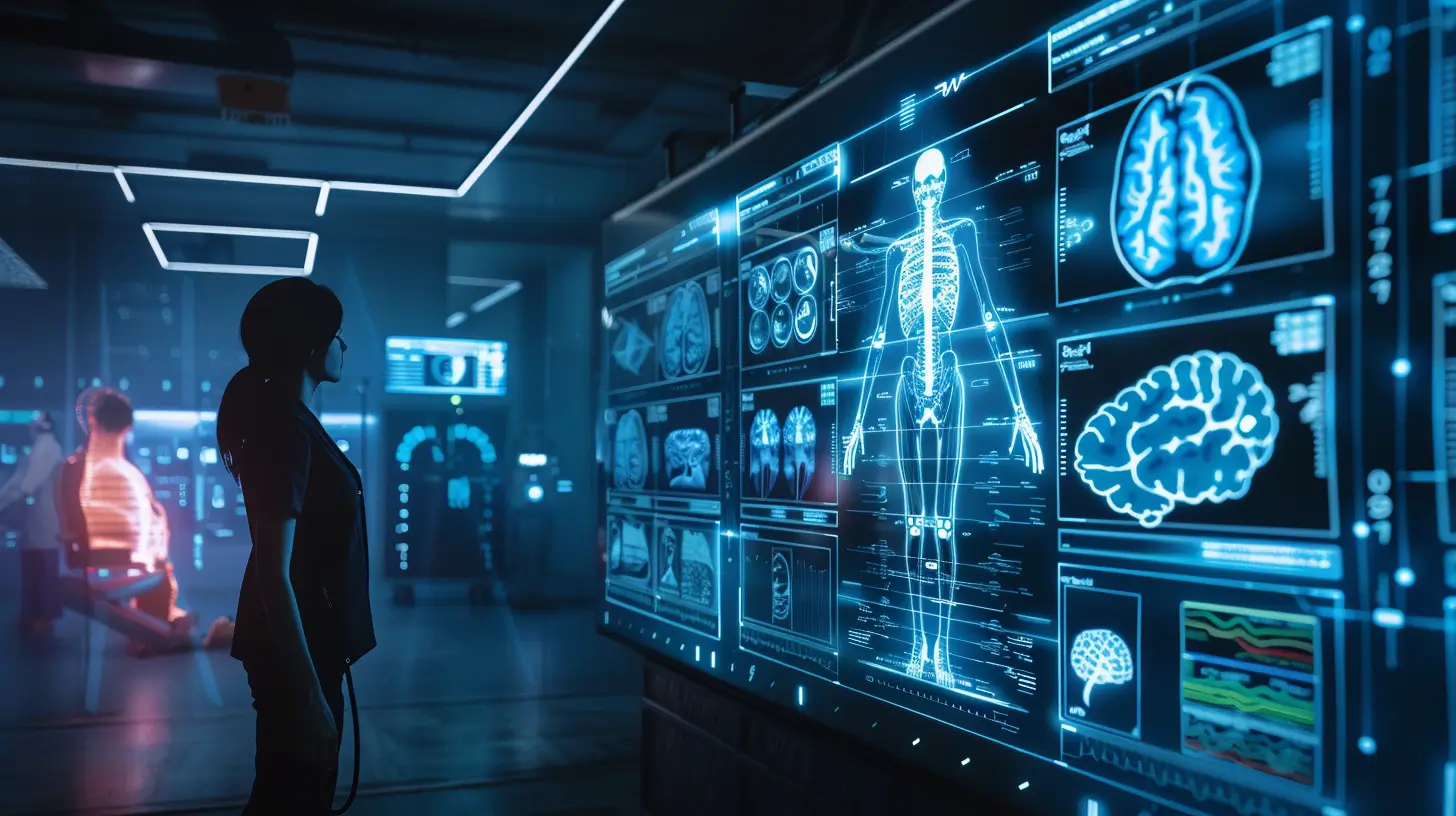
Artificial intelligence is reshaping the landscape of healthcare in ways that were once considered the realm of science fiction. Among its most profound impacts is the transformation of medical diagnosis. The process of identifying disease, evaluating patient symptoms, and determining the most effective treatments has traditionally relied on human expertise. Physicians combine their knowledge, experience, and intuition to interpret test results, clinical signs, and patient histories. While this approach has saved countless lives, it is also prone to delays, human error, and variability in outcomes. AI introduces a new paradigm where data-driven insights complement human judgment, enhancing accuracy, speed, and personalization in medical care.
Medical diagnosis is a complex task. Doctors often face subtle differences in symptoms, ambiguous test results, and overlapping conditions that make identifying the root cause challenging. AI offers a solution by analyzing vast amounts of medical data—clinical notes, imaging scans, lab results, genetic information, and population health trends—far beyond what any single clinician could process. Machine learning algorithms can detect patterns that may be invisible to the human eye, highlight correlations between symptoms and conditions, and even predict the likelihood of future health events.
One of the most visible applications of AI in diagnosis is medical imaging. Radiology, pathology, and dermatology have embraced AI tools that assist professionals in detecting anomalies with remarkable precision. In radiology, AI algorithms can analyze X-rays, CT scans, and MRIs to identify tumors, fractures, or subtle changes that might otherwise go unnoticed. These systems act as a second set of eyes, providing clinicians with insights that reduce the risk of misdiagnosis and improve early detection. Early identification of diseases such as cancer can dramatically increase survival rates, and AI is becoming a crucial partner in achieving this outcome.
Beyond imaging, AI supports laboratory diagnostics. Algorithms analyze blood tests, genetic sequencing, and molecular data to identify conditions ranging from infections to metabolic disorders. For example, AI can detect subtle biomarkers in blood that signal early-stage diseases long before symptoms appear. This predictive capability enables proactive interventions, giving patients a better chance at effective treatment and recovery.
AI also plays a critical role in rare disease diagnosis. Many rare conditions are challenging to identify due to their low prevalence and overlapping symptoms with more common illnesses. AI systems trained on large datasets of patient records can recognize patterns that suggest these conditions. By cross-referencing symptoms, genetic markers, and historical case data, AI helps clinicians consider diagnoses they might otherwise overlook, reducing the time patients spend navigating complex medical journeys.
Another transformative aspect of AI in medical diagnosis is its ability to personalize care. Precision medicine has emerged as a key focus in healthcare, aiming to tailor treatments to individual patients based on genetic, environmental, and lifestyle factors. AI algorithms can analyze an individual’s unique medical profile and recommend targeted diagnostic tests or treatments. This not only improves the likelihood of successful outcomes but also reduces unnecessary testing and associated healthcare costs.
Predictive analytics further enhances diagnosis by anticipating disease progression. Chronic illnesses such as diabetes, heart disease, and neurodegenerative disorders benefit from AI systems that monitor patient data over time, recognize early warning signs, and suggest interventions before complications arise. For clinicians, this represents a shift from reactive care to proactive management, transforming the patient experience and improving long-term health outcomes.
Telemedicine has also leveraged AI to expand diagnostic capabilities. Remote consultations often limit direct access to traditional diagnostic tools. AI-powered platforms can analyze patient-provided data, including images, wearable device readings, and symptom reports, to provide preliminary assessments and guide clinicians toward appropriate testing. This democratizes access to high-quality diagnostics, particularly in underserved or rural areas where medical specialists may be scarce.
AI is not only assisting with detection but also improving the accuracy of diagnoses. Studies have demonstrated that AI algorithms can match or surpass human experts in specific diagnostic tasks. In dermatology, AI systems have been able to identify malignant skin lesions with accuracy comparable to experienced dermatologists. In radiology, algorithms can detect minute features in scans that can be critical in early disease identification. These systems do not replace physicians but augment their capabilities, allowing for more confident decision-making and reduced diagnostic errors.
Integration of AI into clinical workflows presents both opportunities and challenges. Healthcare systems must balance technological adoption with patient safety, regulatory compliance, and clinician acceptance. AI tools require rigorous validation to ensure they perform reliably across diverse populations and conditions. Additionally, clinicians must be trained to interpret AI-generated insights effectively, understanding both the strengths and limitations of the technology. The most successful implementations occur when AI complements human expertise rather than attempting to replace it.
Ethical considerations are also central to AI-driven diagnosis. Patient data privacy is paramount, and the use of AI systems must comply with strict confidentiality standards. Decisions informed by AI should be transparent, explainable, and accountable. Clinicians and healthcare organizations bear the responsibility of ensuring that AI recommendations are integrated thoughtfully and that patients understand how these tools influence their care. Ethical AI practices maintain trust and safeguard the integrity of medical decision-making.
AI is also advancing research in diagnostics. Large-scale data analysis enables the discovery of new biomarkers, disease patterns, and therapeutic targets. By analyzing millions of anonymized patient records, AI can identify correlations and trends that human researchers might overlook. This accelerates the development of diagnostic protocols, novel treatments, and early detection strategies, creating a feedback loop that continuously improves healthcare quality.
Moreover, AI contributes to reducing healthcare disparities. Access to skilled specialists is uneven, particularly in rural or low-resource regions. AI diagnostic tools, integrated into mobile platforms or cloud-based systems, can provide a level of diagnostic support that was previously inaccessible. Patients can receive timely assessments, clinicians can obtain expert insights remotely, and healthcare systems can allocate resources more effectively. This has the potential to improve outcomes and equity on a global scale.
The ongoing evolution of AI in medical diagnosis is also expanding into multimodal approaches. AI systems are increasingly capable of combining diverse data sources—imaging, genetic profiles, electronic health records, lab results, and patient-reported information—to provide holistic assessments. By integrating multiple perspectives, AI can generate a more comprehensive understanding of patient health, improve accuracy, and uncover connections between seemingly unrelated indicators.
Collaboration between technology companies, healthcare institutions, and regulatory bodies is crucial to maximize the benefits of AI while mitigating risks. Clinical trials, real-world evaluations, and continuous monitoring ensure that AI diagnostic tools are safe, reliable, and effective. Stakeholders must work together to establish standards, validation procedures, and ethical guidelines that govern AI use in medicine. This collaborative approach ensures that AI adoption enhances healthcare quality rather than introducing new risks.
Patient engagement is another area transformed by AI. With AI-powered diagnostic tools, patients gain greater insight into their health, understand potential risks, and participate actively in care decisions. User-friendly platforms and interfaces allow patients to visualize trends, track biomarkers, and communicate effectively with healthcare providers. This increased engagement fosters responsibility, compliance, and partnership between patients and clinicians.
Artificial intelligence in medical diagnosis is not limited to humans. Veterinary medicine is also benefiting from AI-assisted diagnostics, from imaging to behavioral assessment. The underlying principles are the same: analyzing complex data, identifying patterns, and providing actionable insights. The broader adoption across healthcare domains demonstrates AI’s versatility and transformative potential.
Looking ahead, the future of AI in medical diagnosis promises even greater integration and sophistication. Real-time monitoring through wearable devices, home-based diagnostic tools, and AI-assisted robotic platforms may allow continuous assessment of patient health. Predictive and prescriptive models could anticipate disease risks, recommend interventions, and optimize treatment plans dynamically. As these technologies mature, the gap between diagnosis and intervention may narrow, enabling more timely, targeted, and effective care.
Despite its promise, AI adoption in medical diagnosis must be approached carefully. Clinicians and healthcare organizations must avoid over-reliance, recognize the limitations of AI, and maintain human oversight. AI is a powerful augmentation, not a replacement, for human expertise. Balancing technological capabilities with empathy, ethical standards, and clinical judgment ensures that patients receive care that is accurate, safe, and compassionate.
AI in medical diagnosis represents a profound shift in healthcare practice. By enhancing detection, improving accuracy, personalizing care, predicting disease progression, and expanding access, AI empowers clinicians to deliver higher-quality care more efficiently. It also offers patients new levels of understanding and engagement with their health. The combination of human expertise and artificial intelligence creates a powerful partnership that redefines what is possible in medicine.
In conclusion, AI is transforming medical diagnosis in ways that are both practical and profound. It complements human intelligence, extends the reach of expertise, accelerates discovery, and improves patient outcomes. As healthcare continues to embrace these technologies, the collaboration between humans and machines will define the next era of medicine. Ethical adoption, continuous oversight, and patient-centered design will ensure that AI serves as a force for good, enhancing the accuracy, accessibility, and quality of healthcare worldwide. The future of diagnosis is not simply human or machine—it is a partnership that leverages the strengths of both to achieve better health for all.