
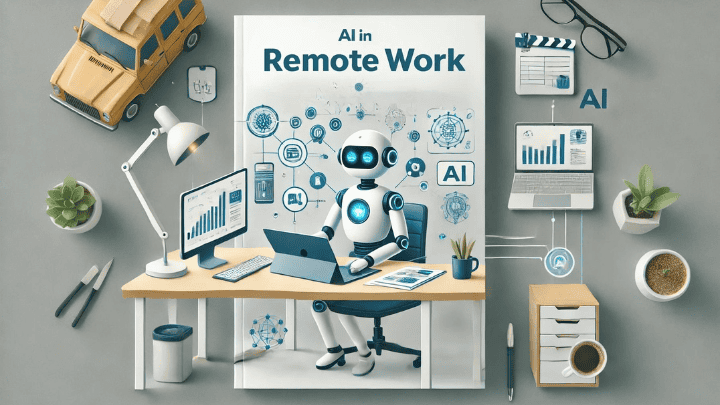
Remote work has shifted from a temporary adjustment to a lasting global movement. Organizations in every industry are discovering that distributed teams can operate efficiently, creatively, and competitively when supported by the right tools and mindsets. Yet remote work also presents challenges. Communication may feel scattered, collaboration can lose its rhythm, and teams sometimes struggle to maintain cohesion without shared physical spaces. These challenges have encouraged rapid adoption of artificial intelligence, which is transforming the way remote teams operate.
AI in remote work is no longer an experimental convenience. It is becoming a core strategic component of how teams collaborate, communicate, and manage time. Intelligent systems now help teams stay connected across continents, reduce repetitive tasks, maintain clarity, and enhance productivity. They bring structure to virtual workflows and help team members focus on meaningful work instead of getting lost in digital noise.
This article explores how AI enhances remote collaboration, strengthens communication, and reshapes the future of distributed work. It offers a holistic look at the advantages, applications, and changing workplace culture shaped by AI-driven tools.
Evolution of Remote Work and the Rise of AI
Remote work has steadily gained traction over the last decade, but global events accelerated this shift dramatically. Organizations were forced to rethink long-held assumptions about where work should be done. In this new landscape, teams needed tools not only for messaging and video calls but for thoughtful collaboration, project organization, and emotional connection.
Traditional digital tools struggled to keep pace with the complexity of remote environments. Virtual work produces more communication, more documentation, and more fragmented workflows. With teams scattered across time zones, tasks become harder to track and decisions take longer to solidify. These new pressures created the perfect environment for AI.
Artificial intelligence stepped in to fill gaps that humans alone could not manage at scale. Rather than simply digitizing the office environment, AI enhanced it. It learned team behavior, improved communication patterns, automated routine tasks, and predicted potential roadblocks. This evolution helped remote work become not only sustainable but often more efficient and innovative than traditional office models.
How AI Transforms Communication in Remote Teams
Communication is the foundation of any successful team, and remote work magnifies the importance of clarity and connection. Without the ability to read body language, overhear conversations, or casually check in with teammates, misunderstandings multiply. AI helps bridge this gap by creating smoother, clearer, and more intentional communication.
Intelligent Meeting Tools
AI now shapes meetings from start to finish. Intelligent systems can schedule sessions based on team availability, create agendas, and provide reminders. During meetings, AI can transcribe discussions, identify key themes, and suggest action items. Afterward, it summarizes the conversation and distributes insights to team members. This ensures that even those who could not attend stay fully informed.
AI-driven meeting assistants also improve inclusion. For multilingual teams, real-time translation helps break language barriers, allowing members to speak comfortably in their native languages. Captioning helps improve accessibility, ensuring conversations are available to all participants.
Better Written Communication
Remote work relies heavily on written communication, whether through email, chats, or project platforms. AI-powered writing assistants help remote teams craft messages that are clear, concise, and aligned with organizational tone. They support employees who may not feel confident writing in a second language or crafting detailed documentation.
These writing tools also reduce miscommunication by highlighting ambiguous phrasing, suggesting structure, and identifying potential misunderstandings. With clearer messages, teams spend less time clarifying and more time executing.
Smarter Notifications and Reduced Digital Noise
Remote workers often feel overwhelmed by the volume of messages, updates, and alerts. AI helps filter what matters and quiet the rest. Intelligent systems learn a user’s work patterns and notify them only when necessary. They prioritize messages, mute irrelevant conversations, and highlight urgent tasks based on context.
This selective communication dramatically reduces digital fatigue and allows employees to focus deeply on tasks that require concentrated attention.
Enhancing Collaboration Through AI
Remote collaboration requires coordination, shared understanding, and flexibility. AI strengthens each of these areas, helping distributed teams work together seamlessly even when physically apart.
Adaptive Workflows
AI-powered platforms analyze project progress, predict bottlenecks, and adjust workflows automatically. Instead of relying on manual tracking or constant check-ins, teams receive AI suggestions about task dependencies, workload balancing, and scheduling. This reduces confusion and ensures everyone knows what to focus on next.
Document and Knowledge Management
In remote work environments, information often becomes scattered across emails, cloud storage, and chat threads. AI brings order to this digital chaos. It indexes documents, identifies duplicates, extracts important data, and surfaces relevant information when needed. It becomes easier to locate old discussions, retrieve crucial files, or understand the context behind earlier decisions.
Intelligent search engines enable teams to ask natural-language questions and receive accurate answers drawn from company knowledge bases. AI learns from repeated patterns and refines its ability to deliver timely insights.
Real-Time Collaboration
AI enhances real-time collaboration through predictive editing, automated suggestions, and intelligent visual tools. In shared documents, AI helps refine content as teams write together. In design or engineering platforms, AI assists in modeling, prototyping, and version control.
These capabilities reduce friction and help team members contribute more effectively without needing constant synchronous coordination.
Automation as a Support System for Remote Teams
Automation is often misunderstood as replacing human work, but in remote environments, it acts more like a support system. It frees individuals from repetitive tasks that drain time and focus. With AI automation, teams can redirect their energy toward creative, strategic, and human-centered work.
Reducing Administrative Burdens
Routine tasks such as filling forms, scheduling meetings, updating spreadsheets, tracking hours, and generating reports take up a significant portion of remote work time. AI handles these tasks easily. Automated systems generate updates, maintain progress logs, and send reminders without human intervention.
This does not just save time. It reduces cognitive load, allowing employees to concentrate on problem-solving and innovation rather than administrative maintenance.
Project and Time Management
AI assists remote teams in setting priorities and managing time more effectively. Intelligent algorithms analyze workloads and suggest optimal schedules. They learn when individuals are most focused and assign tasks accordingly.
AI also alerts managers when workloads become unbalanced, helping them redistribute tasks before burnout occurs. In this way, automation supports healthier working rhythms.
Customer Support and Service
For remote-facing teams, AI chatbot assistants can handle initial inquiries, route messages, and provide immediate responses at any hour. This ensures consistent support without overwhelming team members. Support staff can devote their attention to complex or sensitive issues that require human judgment.
Strengthening Team Culture with AI
Remote work challenges traditional notions of workplace culture. Without shared physical spaces, spontaneous conversations fade, and team bonding must be intentional. AI helps build stronger team culture by enhancing connection, personalization, and emotional intelligence.
Supporting Employee Well-Being
AI wellness tools monitor workload, work hours, and communication patterns. They detect signs of stress or burnout and gently suggest breaks, workload adjustments, or support resources. By observing trends across the organization, AI can help leaders identify systemic issues affecting morale.
These tools offer a sense of care without intruding on privacy. They focus on patterns rather than individual surveillance, respecting boundaries while promoting a healthier remote environment.
Inclusivity and Accessibility
AI enhances inclusivity by offering translation, captioning, transcription, and text-to-speech features. These capabilities support employees with different abilities, language backgrounds, and learning preferences. Remote teams become more globally inclusive, ensuring everyone has an equal opportunity to contribute.
AI can also adjust communication styles for different audiences, making messages more accessible and reducing the risk of unintentional exclusion.
Personalized Learning and Development
Remote work offers opportunities for growth, and AI encourages continuous development through personalized learning recommendations. Intelligent systems provide tailored skill-building resources based on a person’s goals, performance, and interests.
AI-driven training platforms create adaptive learning experiences, helping remote workers gain new capabilities at a comfortable pace. This builds confidence and supports long-term career development.
AI and The Human Element of Remote Work
A central question emerges when discussing AI in remote work: Does artificial intelligence diminish human connection?
The answer depends on how organizations use it. When adopted thoughtfully, AI strengthens the human element by removing obstacles that cause stress, confusion, and inefficiency. It allows individuals to communicate more clearly, collaborate more fluidly, and focus on meaningful interaction.
Promoting Authentic Connection
Rather than replacing personal communication, AI enhances it. Meeting summaries allow participants to listen rather than take notes. Automated translation helps team members speak authentically instead of struggling with language. Smart scheduling reduces friction and gives teams more time to connect during meetings.
AI gives space for human conversation, empathy, and creativity to flourish.
Preventing Misunderstandings
Remote work suffers when messages are unclear or misinterpreted. AI tools help refine tone, identify ambiguous wording, and ensure messages are aligned with team expectations. This reduces tension and encourages more positive communication habits.
Creating More Space for Creative Collaboration
When AI handles administrative tasks, teams regain time for brainstorming, design thinking, and problem-solving. Creativity thrives when individuals are not weighed down by repetitive work.
Data, Privacy, and Ethical Considerations
As AI becomes integrated into remote work, concerns about data privacy and ethical use become increasingly important. Organizations must ensure that AI systems are used responsibly, transparently, and with strong safeguards.
Protecting Employee Data
AI tools rely on data to function effectively. Companies must establish clear policies about what data is collected, how it is stored, and how it is used. Employees should have visibility into these processes and the ability to control their personal information.
Transparency and Trust
AI should assist, not govern. Transparency about how decisions or recommendations are generated builds trust. Employees must understand how AI influences workflows and when humans remain the final decision makers.
Avoiding Over-Automation
AI can easily overwhelm teams when overused. Automation should be applied selectively, with clear goals and thoughtful boundaries. The aim is to support human creativity, not replace it.
Future of AI in Remote Work
The role of AI in remote work is still evolving. What we see today is only the beginning. Future systems will understand team dynamics more deeply, adapt to individual preferences more intelligently, and provide insights that drive strategic success.
Smarter Collaboration Spaces
Virtual workspaces will become more immersive and responsive. AI will help personalize these environments, organize information automatically, and create seamless transitions between tools. Teams will move from one activity to another with less friction.
Advanced Virtual Assistants
AI assistants will become true digital teammates. They will anticipate needs, detect risks earlier, and coordinate tasks across multiple platforms. Instead of giving commands, teams will collaborate naturally with intelligent systems that learn their work patterns.
Emotional Intelligence Integration
Future AI tools will interpret emotional cues in writing, voice, and behavior to offer support or identify communication gaps. This will help remote teams maintain harmony and prevent conflicts before they escalate.
Unified Information Ecosystems
AI will consolidate data across tools, giving teams a unified view of projects, goals, and progress. This interconnected ecosystem will reduce redundancy and improve decision-making