
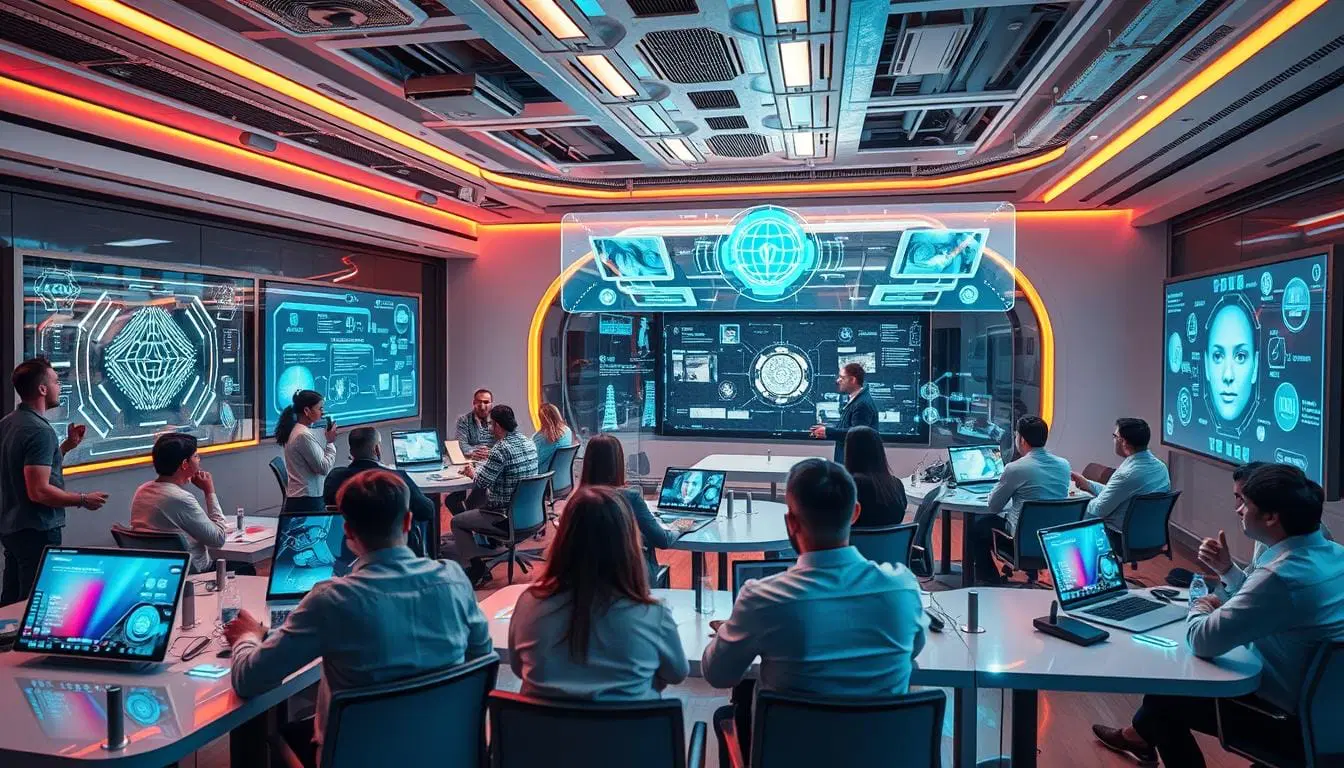
work has become one of the most defining shifts of the modern era. It reshaped how organizations function, how teams interact, and how individuals approach their daily responsibilities. What began as a temporary solution for many companies has transformed into a permanent feature of the global workforce. As remote and hybrid environments continue to expand, one force stands out as an essential driver of efficiency and innovation: artificial intelligence. AI is not merely a supplementary tool in remote work. It is becoming the backbone of smarter collaboration, clearer communication, and more seamless operations.
The digital workplace introduces both opportunities and complexities. Teams scattered across different time zones must find ways to coordinate effectively. Communication can feel fragmented. Workflows may become disorganized without physical proximity and traditional office structure. Employees face challenges in balancing productivity with personal well-being. Managers must ensure accountability, transparency, and connection without micromanagement. This new environment demands solutions that support clarity, consistency, and intelligent decision-making.
Artificial intelligence steps in as a transformative force in each of these areas. It enhances communication, streamlines tasks, and creates a sense of cohesion in teams that rarely share the same physical space. AI offers a level of efficiency that helps overcome the limitations of remote environments. It also opens possibilities for collaboration that go beyond what traditional office settings could achieve. Instead of trying to replicate the physical office, AI paves the way for a smarter, more adaptive digital workspace.
AI’s influence on communication is one of the most significant elements of this transformation. The written word dominates remote work. Messages travel through emails, chat tools, virtual documentation, and project platforms. This volume of written communication can lead to misunderstandings, delays, and information overload. AI-powered writing assistants and communication tools address these issues by refining clarity, tone, and accuracy. They help individuals express ideas more effectively and interpret messages with greater precision.
In global teams, language barriers can affect collaboration. AI-driven translation tools now bridge these gaps instantly. Teams can share documents, participate in meetings, and communicate with confidence regardless of linguistic differences. Real-time translation ensures that no team member feels excluded or uncertain about the meaning behind a discussion. This fosters inclusivity and helps build stronger cross-cultural connections.
AI also improves the quality of virtual meetings. Intelligent meeting assistants can transcribe conversations, highlight key points, and create concise summaries. They help ensure that ideas, decisions, and action steps are captured accurately. Team members who miss a meeting no longer struggle to catch up or sift through lengthy recordings. AI transforms raw conversation into structured, accessible information that keeps everyone aligned.
Beyond communication, AI plays a central role in optimizing collaboration. Remote work often demands more disciplined coordination because casual interactions no longer happen naturally. AI tools help automate scheduling, resource allocation, and project monitoring. Instead of juggling spreadsheets and manual reminders, teams can rely on intelligent systems that manage timelines and identify potential delays. These systems can detect bottlenecks, predict workload challenges, and recommend adjustments that keep projects on track.
Task management platforms enhanced with AI provide personalized guidance. They analyze individual work patterns, helping employees prioritize tasks more effectively. They offer reminders, generate outlines, suggest workflows, and eliminate the friction caused by disorganization. This reduces cognitive load and supports better performance. When individuals work with greater structure and clarity, entire teams benefit from smoother collaboration.
AI’s ability to automate repetitive tasks plays a major role in enhancing productivity. Remote workers often handle administrative responsibilities that disrupt their focus. AI systems can take over these tasks, from sorting emails to processing data and categorizing files. By reducing the time spent on routine work, AI allows individuals to dedicate their energy to creative thinking, strategic tasks, and meaningful problem-solving.
AI-powered virtual assistants further enhance efficiency. They can schedule meetings, set reminders, answer queries, initiate workflows, and connect employees with the information they need. These assistants act as supportive digital partners, enabling remote workers to operate with greater independence and confidence. They minimize delays and help teams maintain a steady pace in their daily operations.
Artificial intelligence also has a profound impact on team engagement. The lack of physical proximity can lead to feelings of isolation or disconnection. AI-driven platforms help maintain a sense of unity through personalized communication, intelligent support systems, and tools that encourage interaction. They can monitor engagement levels, identify patterns of burnout, and recommend interventions to support overall well-being.
AI analytics expand these capabilities further. Managers no longer need to rely solely on subjective observations to evaluate progress. AI insights provide a clearer picture of performance, workflow efficiency, and team dynamics. These insights help leaders make more informed decisions, identify areas for improvement, and create supportive environments for their teams. Instead of enforcing strict oversight, AI encourages transparency without compromising trust.
Another area where AI strengthens remote collaboration is knowledge sharing. In distributed teams, information can get scattered or lost in countless messages and documents. AI-powered knowledge management systems organize information automatically. They categorize files, detect patterns, and surface relevant content when needed. This reduces time spent searching for information and ensures that knowledge is retained even if team members leave the organization.
AI-driven learning platforms also support skill development in remote environments. These tools personalize training programs based on an individual’s needs, strengths, and career goals. Remote workers can develop new abilities at their own pace while receiving tailored recommendations for growth. This encourages continuous learning, a crucial element in fast-evolving industries.
Security is another essential dimension of remote work. Distributed environments may expose teams to vulnerabilities that traditional office setups do not face. AI strengthens security measures by detecting threats, monitoring unusual activity, and preventing unauthorized access. It learns from patterns, identifies risks before they escalate, and provides organizations with tools to protect sensitive data. With the increasing reliance on cloud-based tools and remote access points, AI-powered security solutions are indispensable.
AI also helps reduce the cognitive strain that remote workers often experience. The constant switching between tools, messages, and tasks can create mental fatigue. AI systems integrate workflows, streamline communication, and reduce the noise of unnecessary notifications. By offering context-aware suggestions and consolidating information, AI supports better focus and mental clarity.
In creative fields, AI enhances brainstorming sessions and idea generation. Tools that assist with content creation, visual concepts, and strategic planning help teams explore possibilities more efficiently. Remote creative teams can collaborate with AI as a thought partner, generating inspiration or refining rough ideas into polished concepts.
AI also supports inclusivity in remote work environments. People with disabilities may face barriers in traditional communication formats. AI-driven accessibility tools such as voice recognition, transcription services, predictive text, and adaptive interfaces ensure that every individual can participate fully. This transforms remote work into a more equitable and supportive space.
Despite its many advantages, the integration of AI into remote work requires thoughtful consideration. Organizations must adopt AI in ways that enhance human capabilities rather than replace them. AI should empower individuals, not restrict autonomy. Ethical implementation, transparent communication, and clear guidelines help teams trust these systems and use them responsibly.
Another challenge is balancing automation with human judgment. While AI offers insight and efficiency, human intuition and emotional intelligence remain irreplaceable. Remote work flourishes when technology supports humans in making meaningful decisions, building relationships, and expressing creativity. AI should complement these strengths, not overshadow them.
The future of remote work will continue to evolve as AI becomes more sophisticated. Emerging technologies such as advanced natural language processing, conversational AI, adaptive automation, and virtual reality will further transform collaboration. Virtual workspaces powered by AI may simulate physical presence, allowing teams to interact in immersive environments. AI-generated insights will become even more predictive, helping teams anticipate challenges before they arise.
As remote work becomes more normalized, the demand for smarter collaboration will grow. Organizations that embrace AI thoughtfully will cultivate more resilient, agile, and forward-thinking teams. Employees will enjoy greater flexibility with improved structure, support, and efficiency. Human creativity and strategic thinking will flourish when AI handles more of the logistical and repetitive tasks that often consume time and energy.
Ultimately, AI is reshaping remote work by enriching communication, simplifying collaboration, and enhancing overall well-being. It transforms scattered teams into cohesive units capable of working seamlessly across distances. It gives individuals the tools they need to perform at their best and helps organizations adapt to the changing landscape of modern work.
Remote work is not simply a trend but a fundamental shift in how people engage with their professional lives. AI plays a crucial role in this transformation by enabling smarter workflows, more meaningful interactions, and greater productivity. When integrated thoughtfully, AI becomes a partner that elevates every aspect of the remote work experience.