
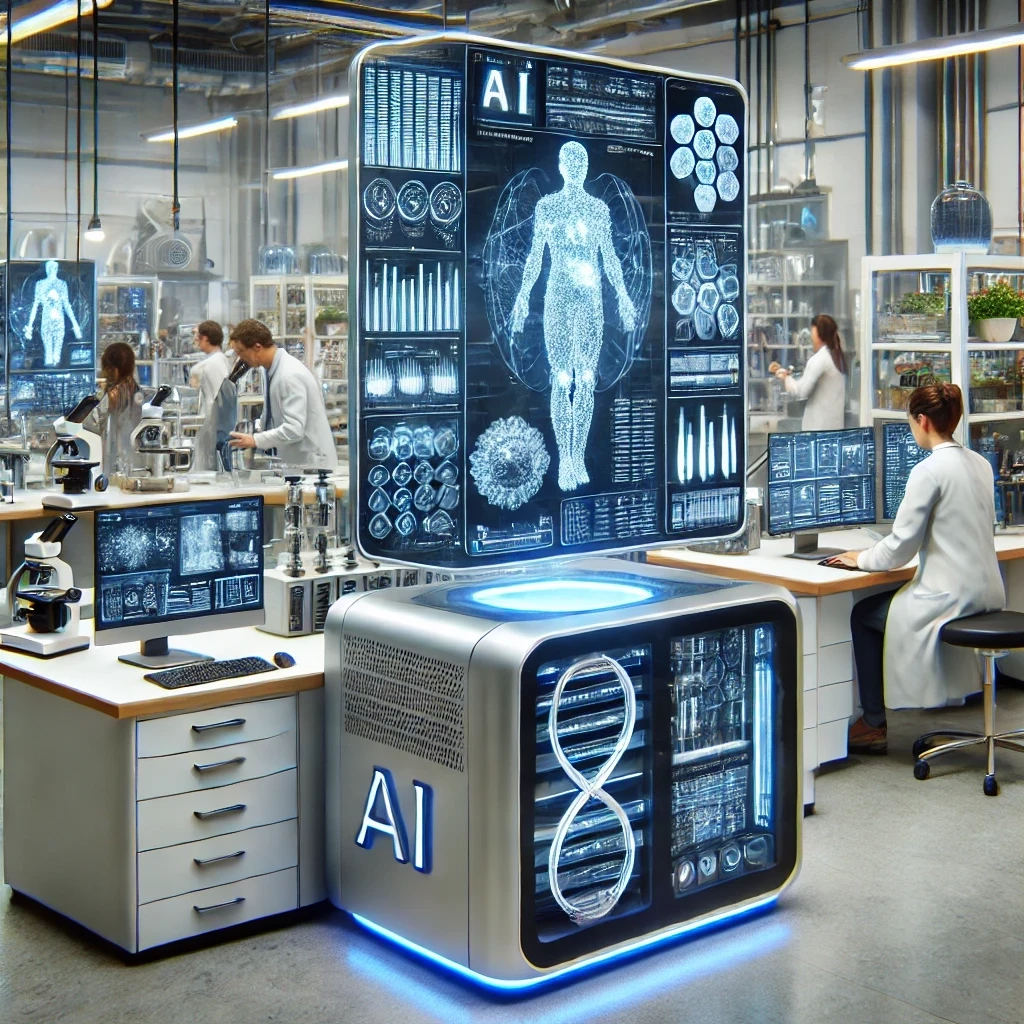
The landscape of global health is undergoing a profound transformation, shaped by rapid technological advancements and an urgent need to address complex medical challenges. Among these advancements, artificial intelligence has emerged as one of the most influential forces reshaping how the world approaches medical research, pharmaceutical innovation, and disease prevention. While drug discovery has traditionally been a slow, expensive, and highly uncertain process, AI is shifting this paradigm by accelerating timelines, improving accuracy, and opening possibilities once considered out of reach. The integration of AI into drug discovery marks a turning point not only for pharmaceutical companies but for humanity’s effort to combat global health threats such as pandemics, antimicrobial resistance, cancer, rare diseases, and rising chronic conditions.
AI is not just a tool for handling large volumes of data. It has become a strategic partner in identifying patterns, predicting molecular behaviors, analyzing clinical data, and optimizing the drug development pipeline. The traditional drug discovery timeline often spans more than a decade, with billions of dollars spent and countless failed experiments. AI, however, is steadily reducing these barriers by enabling researchers to simulate, model, and predict outcomes at unprecedented speed and precision. Instead of testing thousands of compounds blindly, scientists can now use algorithms to narrow down a small group of promising candidates within days. In some cases, AI has reduced early-stage research timeframes from years to months.
This shift holds enormous potential for global health. Diseases that disproportionately affect low-income countries, once overlooked due to lack of financial incentive, now stand a greater chance of receiving attention. AI can identify new therapeutic possibilities using existing drugs, making treatments more accessible and affordable. It can help tackle pandemics by predicting viral mutations, analyzing real-world evidence, and guiding vaccine design. It can uncover insights hidden within the genetic and biological complexities of rare and neglected diseases. In short, AI is not just accelerating drug discovery; it is enabling a more responsive, inclusive, and globally beneficial biomedical ecosystem.
The Traditional Challenges of Drug Discovery
To fully appreciate the significance of AI in drug discovery, it is important to understand the challenges that have historically hindered pharmaceutical development. Drug discovery involves multiple layers of scientific uncertainty, from identifying a biological target to evaluating safety profiles and clinical outcomes. Each step introduces costly risks, often leading to late-stage failures that set companies back financially and delay crucial treatments for patients.
The first challenge lies in the immense complexity of biological systems. Human biology involves billions of molecular interactions, genetic variations, and environmental influences. Determining the right target for a disease requires deep understanding of these systems, and errors in early hypotheses can derail entire development programs. Additionally, discovering a compound that interacts with a target safely and effectively demands extensive experimentation, computational modeling, and chemical optimization. The cost of testing thousands of compounds, conducting preclinical studies, and running clinical trials adds substantial financial burden.
Another challenge is the shortage of data necessary to make accurate predictions. Rare diseases, tropical diseases, and emerging infections often lack sufficient research, making it difficult for scientists to develop effective therapies. The imbalance between global health needs and pharmaceutical profitability has also created gaps in treatment availability, leaving vulnerable populations at risk.
Furthermore, lengthy timelines prevent rapid response during public health emergencies. When an outbreak occurs, such as with Ebola, Zika, or COVID-19, delays in drug development can lead to widespread transmission and loss of life. The world needs faster approaches to identify, test, and deploy treatments, and this is where artificial intelligence offers profound advantage.
AI Is Transforming the Drug Discovery Pipeline
AI enhances the drug discovery pipeline by bringing intelligence, automation, and predictive power to each stage of the process. The traditional approach relies heavily on trial and error, while AI relies on learning patterns from vast datasets, enabling faster and more informed decision-making.
At the earliest stage, target identification becomes significantly more efficient. AI systems trained on genomic, proteomic, and clinical data can identify which biological targets play a crucial role in disease mechanisms. These algorithms can discover relationships that humans may miss, revealing novel therapeutic pathways.
Once a target is defined, AI assists in designing and screening molecules. Machine learning models can predict how a compound will behave before any physical experiment is conducted. Instead of manually synthesizing every candidate, researchers can generate virtual molecules and simulate their interactions with biological targets. This dramatically reduces the cost and time associated with chemical screening.
AI also supports lead optimization, a critical step where promising compounds are refined to maximize effectiveness and minimize toxicity. Predictive models can forecast how small changes in molecular structure may influence a drug’s behavior. This allows scientists to narrow their focus to the most promising variations, enhancing precision throughout the process.
Beyond research, AI continues to provide value during clinical trials. It can identify optimal patient populations, forecast adverse events, and analyze responses in real time. Companies can conduct adaptive trials, adjusting parameters based on AI-driven insights. This ensures that resources are used more efficiently and that patient safety remains the highest priority.
AI also plays an essential role in drug repurposing. By analyzing the molecular and biological characteristics of existing medications, AI can reveal new uses for drugs already approved for other conditions. This approach is faster and often safer, as these medications have well-known safety profiles. Drug repurposing powered by AI has already shown success in identifying potential treatments during health emergencies and continues to be a promising path for addressing global health challenges.
The Role of Big Data in Accelerating Discovery
AI cannot function effectively without data, and the explosion of biological data over the past two decades has created fertile ground for innovation. Advances in genomics, proteomics, imaging, and electronic health records provide unparalleled insight into human biology. Every patient, every clinical trial, and every scientific study contributes to a growing pool of information that AI systems can learn from.
For example, advances in DNA sequencing allow researchers to understand genetic variations linked to disease. AI models trained on this genetic information can predict susceptibility to certain conditions and identify targets for precision therapies. Similarly, large datasets from hospitals and research institutions offer real-world evidence that helps refine treatment strategies and recognize patterns in patient outcomes.
The availability of high-resolution biological imaging also enhances drug discovery. AI can analyze images of cells, tissues, and molecular structures faster than human experts, identifying subtle features that may indicate disease progression or drug effectiveness. Automated image analysis enables scientists to conduct high-throughput screening at an unprecedented pace.
In addition, computational chemistry generates massive amounts of data regarding molecular structures and interactions. AI models can analyze this data to generate new chemical libraries or predict which compounds will bind to specific targets. This synergy between big data and machine learning forms the foundation of modern drug discovery, making it possible to innovate at a scale and speed once unimaginable.
AI and Global Health Bridging the Gap in Treatment Access
One of the most transformative aspects of AI-driven drug discovery is its potential to improve global health equity. Historically, the pharmaceutical industry has focused primarily on diseases prevalent in wealthy nations, leaving low-income regions underserved. Conditions such as malaria, tuberculosis, neglected tropical diseases, and certain viral infections affect millions but have historically received less investment due to lower commercial returns.
AI has the power to change this dynamic. By reducing costs and accelerating timelines, AI allows researchers and organizations to work on diseases that were previously considered economically unviable. Non-profit organizations, academic institutions, and public health agencies can use AI platforms to identify potential treatments without depending solely on large pharmaceutical budgets.
During global health crises, AI offers a rapid response framework. The ability to simulate viral mutations, predict disease spread, and analyze treatment efficacy enables quicker intervention. During pandemics, the speed at which treatments and vaccines are discovered makes a critical difference in saving lives and reducing long-term consequences.
AI also enhances global health through personalized medicine. While personalized treatments are often associated with high-resource settings, the insights gained through AI can be adapted to create targeted therapies for diverse populations. Genetic diversity plays a significant role in treatment effectiveness, and AI helps ensure that drug development considers a broader range of global genetic profiles.
Furthermore, AI can assist low and middle income countries by improving diagnostic capabilities, enabling local research, and supporting decentralized clinical trials. Through cloud-based platforms and global research collaboration, AI facilitates a more inclusive environment where knowledge is shared and innovation is distributed instead of concentrated.
Success Stories Demonstrating AI Impact
The rise of AI-powered drug discovery has already produced notable achievements that validate its transformative potential. Several companies and research institutions have successfully used AI to identify drug candidates, optimize compounds, and even progress treatments into clinical trials at unprecedented speed.
One of the most well-known examples involves the rapid identification of molecules targeting infectious diseases. AI models have been used to screen millions of compounds against bacteria, viruses, and parasites in a fraction of the time traditional methods would require. Some of these candidates have shown strong promise, moving quickly into preclinical studies.
In oncology, AI has contributed to the design of novel molecules that selectively target cancer-driving proteins. By modeling the complex interactions between cancer cells and therapeutic agents, AI systems can help create highly specific treatments with fewer side effects. This targeted approach increases the likelihood of clinical success and improves patient outcomes.
Rare diseases have also benefited significantly from AI-driven approaches. Conditions that previously received little attention due to small patient populations can now be studied using computational models. AI helps uncover the genetic roots of these diseases, identifies potential targets, and suggests therapeutic strategies that would have taken decades to discover through traditional research.
Drug repurposing powered by AI has also shown strong results. Several known medications have been identified as potential treatments for emerging viral infections through algorithmic analysis. These findings provide a faster route to clinical evaluation, offering hope during times of urgent medical need.
Ethical Considerations and Responsible Use of AI
As AI becomes more deeply integrated into drug discovery, ethical considerations must be prioritized. While AI offers remarkable speed and precision, its decisions are only as reliable as the data and models it is based on. Ensuring transparency in AI algorithms is essential to maintain trust and scientific integrity.
One of the major concerns involves data bias. If the datasets used to train AI systems do not represent diverse populations, the resulting predictions may be less accurate for certain groups. This can reinforce existing healthcare inequalities. To address this, researchers must ensure that datasets include diverse genetic backgrounds, clinical histories, and environmental contexts.
Privacy is another key concern. The use of patient data, genomic information, and medical records must follow strict ethical guidelines to protect individual rights. Secure data sharing frameworks and anonymization techniques are essential to enable research while respecting privacy.
There is also the need for regulatory oversight. As AI-generated compounds enter clinical trials, regulatory agencies must adapt their evaluation criteria to account for computational methods. Clear guidelines on AI validation, model interpretability, and safety assessment are necessary to ensure patient protection.
Responsible use of AI requires a collaborative effort among governments, research institutions, pharmaceutical companies, and global health organizations. When aligned with ethical principles, AI can accelerate medical breakthroughs while upholding standards of safety and equity.
The Future of AI Driven Drug Discovery
The future of AI-powered drug discovery promises even greater innovation. As algorithms grow more advanced and datasets expand, AI will become capable of tackling increasingly complex biological challenges. Multi-scale modeling, which integrates molecular, cellular, and systemic data, will enable deeper insights into disease mechanisms. Predictive models will guide personalized therapies tailored to individual patients.
Integration of AI with other emerging technologies such as quantum computing, synthetic biology, and advanced automation will further accelerate drug development. Quantum computing, in particular, may reshape molecular simulation by solving calculations that traditional computers struggle with. Coupled with AI, this could open new frontiers in molecular design.
Automation in laboratories will also become more widespread. Robotic systems guided by AI models will conduct experiments around the clock, generating data and refining compounds continuously. This perpetual learning cycle will make drug discovery more efficient, accurate, and scalable.
Furthermore, global collaboration will define the future of AI in healthcare. The ability to share insights across borders, integrate international datasets, and coordinate research efforts will create a more connected and resilient global health ecosystem. This collaboration will be crucial for responding to future pandemics, addressing neglected diseases, and ensuring equitable access to new therapies