
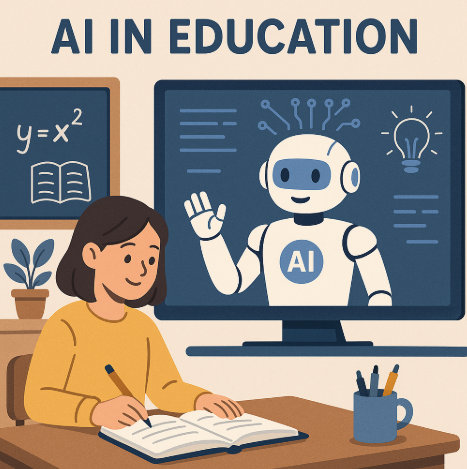
Education has always evolved alongside human progress. From chalkboards to digital classrooms, every technological advancement has reshaped the way knowledge is delivered and absorbed. In recent years, artificial intelligence has emerged as one of the most influential technologies affecting education systems around the world. Schools, colleges, and universities are increasingly adopting AI-powered tools to support teaching, personalize learning, and enhance student outcomes. This transformation has sparked an important question within the education community: can artificial intelligence truly improve student performance?
The answer lies in understanding how AI works in educational settings and how it changes the traditional relationship between teachers, students, and knowledge. Artificial intelligence is not simply a tool for automation; it is a system capable of analyzing data, recognizing patterns, and making intelligent recommendations. When applied thoughtfully in classrooms and digital learning environments, AI has the potential to address many long-standing challenges in education, including uneven learning pace, lack of personalized instruction, limited feedback, and student disengagement.
This article explores how artificial intelligence is shaping modern education and examines its impact on student performance. It also discusses the opportunities, challenges, and future possibilities that arise as AI becomes more integrated into learning environments.
The Changing Landscape of Education
Traditional education systems were designed around a uniform structure. A teacher delivers lessons to a group of students following the same curriculum, pace, and evaluation methods. While this approach works for many learners, it often fails to address the diverse learning styles and abilities found within any classroom.
Some students grasp concepts quickly and require advanced challenges, while others may need additional time, guidance, and practice to fully understand the material. In conventional classrooms, teachers often struggle to provide individualized attention to every learner due to time constraints and large class sizes.
Artificial intelligence introduces a new dimension to education by enabling systems that adapt to each student’s unique learning needs. Instead of forcing students to conform to a fixed structure, AI-powered platforms analyze how students interact with learning materials and adjust the experience accordingly. This shift represents a major transformation in the philosophy of education, moving from standardized instruction toward personalized learning.
Personalized Learning Through Artificial Intelligence
One of the most significant ways artificial intelligence improves student performance is through personalized learning. AI-driven educational platforms can track a student’s progress in real time, identifying strengths, weaknesses, and learning patterns.
For example, when a student struggles with a particular concept in mathematics or science, AI systems can detect the difficulty and provide additional explanations, practice exercises, or alternative methods of instruction. If the student demonstrates mastery of a topic, the system may present more advanced material to maintain engagement and intellectual challenge.
This personalized approach allows students to learn at their own pace without feeling rushed or held back. It also helps prevent learning gaps from widening over time. When students receive immediate support and targeted guidance, they are more likely to build confidence and develop a deeper understanding of the subject.
Moreover, personalized learning fosters a sense of ownership over the learning process. Students become active participants rather than passive recipients of information. They can explore topics that interest them while receiving structured guidance from AI systems designed to support their educational goals.
Intelligent Tutoring Systems
Artificial intelligence has made it possible to develop intelligent tutoring systems that function as digital mentors for students. These systems simulate the support of a human tutor by providing step-by-step explanations, answering questions, and guiding learners through complex topics.
Unlike traditional tutoring, which may be limited by time, location, or cost, AI-powered tutoring systems are accessible at any moment. Students can review lessons, practice skills, and receive instant feedback without waiting for scheduled sessions.
These tutoring systems rely on sophisticated algorithms that analyze student responses and adapt the instruction accordingly. When a student makes a mistake, the system does not simply mark the answer as incorrect. Instead, it examines the reasoning process and offers hints or explanations that help the student correct the misunderstanding.
This interactive learning experience encourages critical thinking and problem-solving skills. Students are not merely memorizing answers but learning how to approach challenges logically and creatively.
Real-Time Feedback and Continuous Assessment
Assessment plays a crucial role in measuring student performance and guiding improvement. However, traditional assessment methods often involve delayed feedback. Students may wait days or even weeks to receive results from assignments or examinations.
Artificial intelligence transforms this process by enabling real-time feedback. As students complete exercises or quizzes on AI-powered platforms, the system instantly evaluates their responses and provides constructive feedback. This immediate response helps students identify mistakes and correct them before misconceptions become deeply ingrained.
Continuous assessment also allows educators to monitor student progress more effectively. AI systems can generate detailed reports highlighting areas where students excel and areas where they need additional support. Teachers can use this information to adjust lesson plans, provide targeted interventions, and ensure that no student falls behind.
In addition, real-time feedback creates a more engaging learning environment. Students remain motivated when they can see their progress and understand how their efforts contribute to improvement.
Enhancing Teacher Effectiveness
While artificial intelligence plays a significant role in improving student performance, it does not replace the human element of education. Teachers remain central to the learning experience. Instead, AI serves as a powerful assistant that enhances teaching effectiveness.
Administrative tasks such as grading assignments, tracking attendance, and analyzing performance data can consume a large portion of a teacher’s time. AI-powered systems automate many of these tasks, allowing educators to focus on meaningful interactions with students.
Teachers can devote more energy to mentoring, facilitating discussions, and designing creative learning activities. They can also use AI-generated insights to better understand their students’ needs and adapt their teaching strategies accordingly.
For instance, if AI analytics reveal that a large number of students struggle with a specific concept, the teacher can revisit the topic using different teaching methods. This collaborative relationship between teachers and AI leads to more responsive and effective instruction.
Improving Student Engagement
Student engagement is a critical factor in academic success. When learners feel disconnected or uninterested in the material, their performance often declines. Artificial intelligence offers innovative ways to make learning more interactive and engaging.
Many AI-powered educational platforms incorporate elements such as adaptive quizzes, interactive simulations, and personalized recommendations. These features transform learning from a passive activity into an immersive experience.
Gamified learning environments are another example of how AI enhances engagement. By introducing challenges, rewards, and progress tracking, these systems encourage students to remain motivated and actively participate in their studies.
Furthermore, AI can analyze patterns of student engagement to identify when learners begin to lose focus. The system may suggest breaks, offer alternative activities, or introduce new content to maintain interest.
By keeping students engaged and motivated, artificial intelligence contributes to better concentration, deeper understanding, and improved academic outcomes.
Supporting Diverse Learning Styles
Every student learns differently. Some individuals prefer visual explanations, while others respond better to written material, audio instruction, or hands-on activities. Traditional classroom environments may not always accommodate these diverse preferences.
Artificial intelligence addresses this challenge by offering multiple forms of content delivery. AI-driven platforms can present information through videos, diagrams, interactive exercises, and written explanations, allowing students to choose the format that suits them best.
In addition, AI can analyze which learning methods produce the best results for each student. Over time, the system adapts to prioritize those methods, creating a highly customized learning experience.
This flexibility helps students develop stronger connections with the material and enhances their ability to retain information.
Bridging Educational Gaps
Educational inequality remains a significant global challenge. Students in underserved communities often face limited access to quality teaching resources, learning materials, and academic support.
Artificial intelligence has the potential to bridge some of these gaps by making high-quality educational tools more widely accessible. Online AI-powered platforms can reach students in remote locations, providing personalized instruction regardless of geographical barriers.
Language translation technologies powered by AI also enable students to access learning materials in their native languages. This capability opens new opportunities for learners who previously struggled due to language barriers.
Additionally, AI can assist students with disabilities by offering specialized tools such as speech recognition, text-to-speech systems, and adaptive learning interfaces. These innovations help create a more inclusive educational environment where all students have the opportunity to succeed.
Data-Driven Decision Making in Education
One of the most powerful features of artificial intelligence is its ability to analyze large amounts of data and generate meaningful insights. In educational contexts, this capability enables data-driven decision making at both the classroom and institutional levels.
AI systems collect information about student behavior, learning progress, engagement patterns, and assessment results. By analyzing this data, educators can identify trends that may not be immediately visible through traditional observation.
For example, AI analytics might reveal that students consistently struggle with a particular concept across multiple classes. Educational institutions can use this information to redesign curriculum materials, improve teaching strategies, or introduce additional support resources.
Similarly, early warning systems powered by AI can detect signs that a student may be at risk of falling behind or dropping out. Educators can intervene early, providing guidance and support before the situation becomes more serious.
Challenges and Ethical Considerations
Despite its many benefits, the integration of artificial intelligence in education also raises important challenges and ethical questions. One concern involves data privacy. AI systems rely on large volumes of student data to function effectively, and safeguarding this information is essential.
Educational institutions must implement strong security measures and transparent policies to ensure that student data is collected and used responsibly. Protecting privacy is critical for maintaining trust between students, educators, and technology providers.
Another challenge involves the potential for overreliance on technology. While AI can enhance learning experiences, it should not replace the human relationships that form the foundation of education. Emotional support, mentorship, and social interaction remain essential components of student development.
There is also the issue of digital accessibility. Not all students have equal access to high-speed internet, modern devices, or digital learning platforms. Without careful planning, the adoption of AI could inadvertently widen existing inequalities.
Addressing these challenges requires thoughtful implementation, collaboration among educators and technology developers, and a commitment to ensuring that AI serves the best interests of students.
The Future of Artificial Intelligence in Education
As artificial intelligence continues to evolve, its influence on education is likely to expand even further. Future AI systems may become even more sophisticated in understanding human learning patterns and adapting instruction accordingly.
Virtual reality and augmented reality technologies combined with AI could create immersive educational experiences where students explore historical events, conduct scientific experiments, or practice complex skills in simulated environments.
Advanced conversational AI systems may also serve as interactive learning companions capable of engaging students in meaningful discussions, answering questions, and guiding research projects.
In addition, AI may play a role in shaping lifelong learning pathways. Instead of following a fixed academic journey, individuals could receive personalized recommendations for courses, skills development, and career opportunities throughout their lives.
These developments suggest that artificial intelligence will not only improve student performance but also transform the broader concept of education in the digital age.