
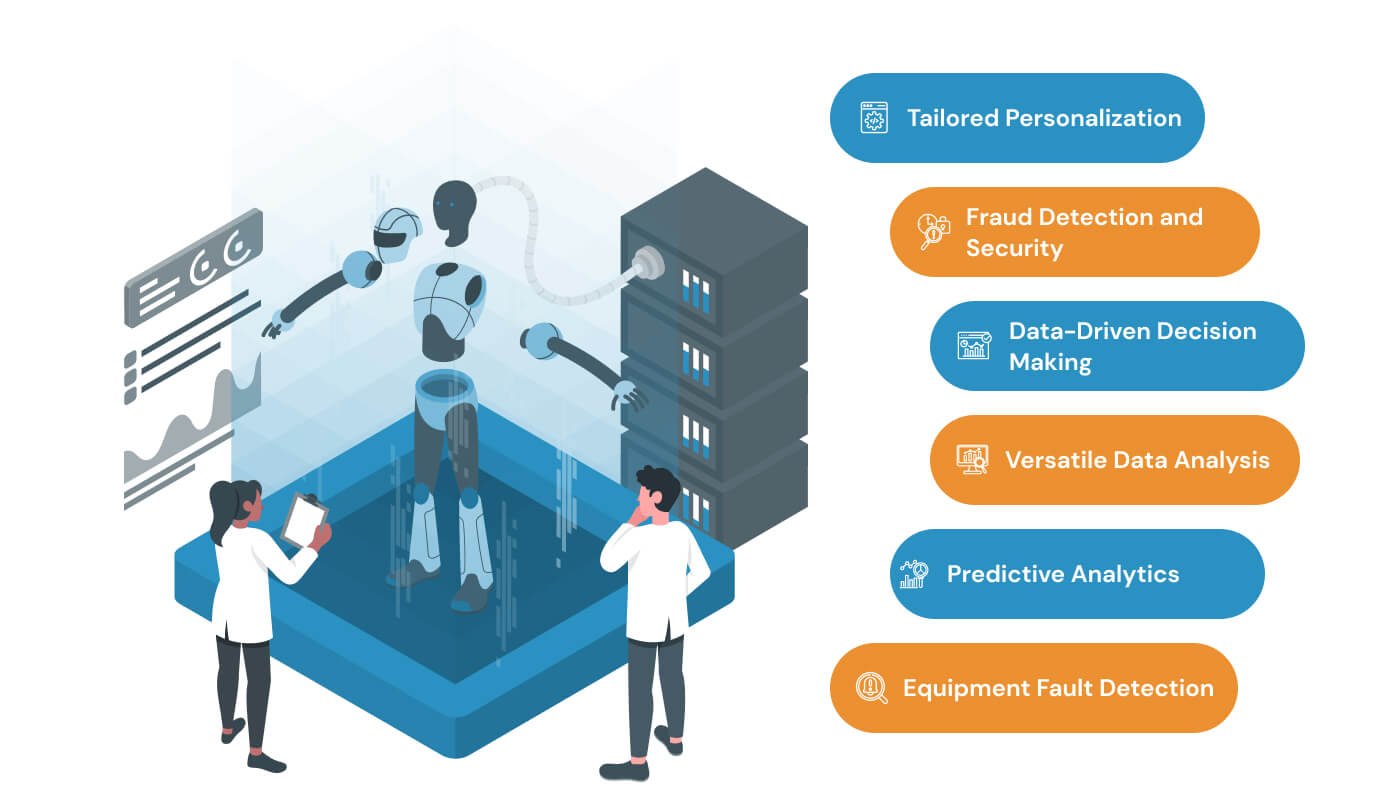
Predictive analytics has become one of the most transformative uses of artificial intelligence in the modern business world. What once required specialist statisticians, slow manual analysis, and limited data samples is now accessible to businesses of all sizes through AI-powered systems. Predictive analytics gives companies the ability to anticipate consumer behavior, forecast market trends, optimize operations, and make strategic decisions with a level of accuracy that was unimaginable for most organizations a decade ago. It is not just a tool for predicting the future. It is a method for shaping it.
At the center of predictive analytics is the idea that data holds patterns. When analyzed properly, these patterns can reveal what is likely to happen next. AI brings this concept to life by analyzing large volumes of information quickly and intelligently. Instead of relying on static reports or backward-looking metrics, businesses can now look ahead with confidence. AI models learn from past behavior, real-time inputs, and contextual signals to generate insights that drive action. For businesses navigating uncertainty, AI becomes a guiding force that illuminates the path forward.
The evolution of predictive analytics mirrors the growth of AI itself. Early systems were limited by the amount of data they could process and the speed at which they could analyze it. Today, advanced algorithms can examine enormous datasets in seconds, detect patterns that humans would miss, and adapt as new information arrives. The result is a dynamic form of intelligence that helps businesses stay proactive rather than reactive. In a world where markets shift quickly and customer expectations change rapidly, this advantage is invaluable.
One of the most significant ways predictive analytics is reshaping business is through customer understanding. Companies used to rely on intuition to guess what customers wanted. Marketing teams would brainstorm strategies based on general demographics and broad behavior trends. Predictive analytics removes guesswork by offering detailed insights into individual preferences. It identifies which customers are likely to buy a product, which ones may stop engaging, and what types of messages resonate most with each group. Businesses can tailor their strategies to meet customer needs at the perfect moment.
This level of personalization creates deeper connections between brands and their audiences. Customers feel understood when a business anticipates their needs. Predictive analytics powers product recommendations, targeted promotions, and custom experiences that build loyalty. Instead of overwhelming customers with irrelevant offers, businesses can deliver value that aligns with their interests. For entrepreneurs and companies trying to stand out in a crowded digital environment, this personal touch becomes a competitive advantage.
Predictive analytics also influences financial planning. Forecasting revenue, budgeting for growth, and managing risk all rely on accurate predictions. Traditional forecasting often depends on historical data alone. While useful, it does not capture shifts in market behavior or emerging trends. AI-enhanced predictive analytics looks beyond simple patterns. It integrates external factors, real-time data, and evolving consumer signals. This gives businesses a more reliable view of how their financial future may unfold.
Companies can prepare for seasonal demand changes, anticipate cash flow challenges, and identify opportunities for expansion. Retailers can determine which products will perform well in upcoming seasons. Service businesses can forecast busy periods and plan resource allocation. Investors can use insights to evaluate market trends with greater clarity. In every scenario, predictive analytics provides the foundation for smarter, more informed financial decisions.
Another major area of impact is operational efficiency. Businesses run more smoothly when they can predict disruptions and respond before problems arise. Supply chain management, in particular, has been revolutionized by predictive analytics. Companies can anticipate shortages, delays, or price fluctuations and adjust their strategies ahead of time. AI detects signals such as shifts in supplier behavior, changes in customer demand, and global events that may affect logistics. This gives companies the power to act early and maintain stability.
Predictive analytics enhances internal operations as well. It helps businesses understand where inefficiencies occur, which processes take too long, and how resources should be allocated. Staffing becomes more strategic when businesses can foresee busy periods. Inventory becomes more manageable when businesses know which products will move quickly. By reducing waste and improving performance, predictive analytics saves time, money, and energy.
The role of predictive analytics in risk management is equally profound. Every business faces risk, whether through market volatility, operational challenges, or customer behavior. Predictive analytics analyzes risk factors in detail, identifies patterns that may indicate potential problems, and provides recommendations for preventive action. Fraud detection systems use predictive modeling to identify unusual transactions before they escalate. Credit risk assessments become more accurate through AI-driven forecasting. Even cybersecurity benefits from predictive analytics, which can detect unusual activity that may signal a threat.
Businesses also use predictive analytics to enhance product development. Understanding what customers want before investing in new features or offerings is essential. AI analyzes customer feedback, market trends, competitor behavior, and usage patterns to identify emerging needs. This helps companies innovate more strategically. Instead of taking risks based solely on assumptions, they create products guided by data-driven insights. Predictive analytics allows companies to stay ahead of competitors by recognizing opportunities early.
Marketing strategies have also been reshaped by predictive analytics. Instead of sending broad campaigns or experimenting without direction, businesses can target audiences with precision. AI analyzes consumer behavior across multiple channels, detects patterns in engagement, and determines which individuals are most likely to respond to certain messages. This improves campaign performance, reduces advertising waste, and increases return on investment. Predictive analytics transforms marketing from an art into a blend of creativity and scientific accuracy.
Customer retention is another area where predictive analytics shines. It costs far more to acquire a new customer than to retain an existing one. Predictive models identify signs of declining engagement long before a customer disappears. By recognizing early indicators of churn, businesses can take action to reconnect with customers. They can offer incentives, address concerns, or re-engage users through personalized outreach. Predictive analytics gives companies the chance to strengthen relationships rather than lose them.
Sales teams benefit from predictive lead scoring. Instead of spending time on prospects who may never convert, predictive analytics evaluates leads based on behavioral patterns and engagement history. It identifies which prospects have the highest potential and which require more nurturing. This helps sales teams prioritize their efforts and close deals more efficiently. Businesses experience shorter sales cycles, increased conversion rates, and more predictable revenue streams.
Human resources also gains value from predictive analytics. AI helps businesses forecast future hiring needs, identify skill gaps, and assess employee performance trends. Companies can anticipate which teams may experience workload increases and prepare accordingly. Predictive analytics also supports employee retention by identifying early signs of burnout or disengagement. By addressing issues proactively, businesses create healthier, more supportive work environments.
One of the reasons predictive analytics has become widely accessible is the growing availability of user-friendly platforms. Earlier systems required technical skills and large budgets. Today, cloud-based AI solutions allow small businesses to access powerful predictive capabilities with minimal expertise. Many platforms automate model building, data integration, and insight generation. This democratization empowers entrepreneurs, startups, and small teams to compete with larger organizations.
Despite the tremendous benefits, predictive analytics also comes with considerations. Businesses must ensure that the data feeding their models is accurate and relevant. AI predictions are only as strong as the information behind them. Ethical considerations also play a role. Transparent use of data, responsible modeling practices, and fairness in decision-making are crucial to maintaining trust. Businesses must balance efficiency with integrity to ensure that predictive analytics enhances their operations without compromising values.
Another challenge lies in understanding the limitations of predictive analytics. While AI can provide remarkably accurate forecasts, it cannot predict every outcome perfectly. External events, unexpected disruptions, and human behavior can influence results in ways no algorithm can fully anticipate. Businesses must use predictive analytics as a guide rather than an absolute rule. The strongest strategies blend data-driven insights with human judgment.
As predictive analytics continues to evolve, its impact on business will only grow stronger. AI models will become more advanced, data sources more diverse, and insights more precise. Businesses will shift from reactive strategies to proactive planning in every area of operation. Predictive analytics will become a core component of decision-making, shaping everything from customer engagement to product innovation.
The future of business belongs to organizations that can anticipate change rather than chase it. Those who embrace predictive analytics will not only stay competitive but define the direction of their industries. The advantage lies in seeing beyond the present moment, recognizing opportunities before they emerge, and navigating uncertainty with confidence.
Predictive analytics is more than a technological advancement. It is a strategic mindset. It encourages businesses to look forward, understand patterns, and make choices that align with future outcomes. It bridges the gap between data and decision-making, turning information into intelligence and intelligence into action.
From small startups to global enterprises, predictive analytics gives businesses the power to operate with clarity, precision, and agility. It unlocks potential by helping leaders understand what may happen next and how to prepare for it. In an era defined by rapid change, the ability to predict the future becomes one of the most valuable assets a business can possess.
AI offers this advantage through predictive analytics. And as more organizations recognize the transformative power of this technology, it will continue to drive innovation, growth, and intelligent decision-making across every industry.